How to Clear Land for a Barndominium: A Step-by-Step Guide
This guide walks you through what to expect when clearing land for a barndominium, what decisions you'll need to make upfront, and how to find the right contractor to do the work.

Start With a Site Plan (Even a Rough One)
Before you call a land clearing contractor, have a general idea of where the barndominium will sit on your property. You don't need a finalized blueprint. You just need to know:
Which section of the lot you're building on
Approximate footprint size (most barndominiums run 30x40 to 60x100 feet)
Where your driveway access will come from
Any setback requirements from property lines or easements
This matters because a contractor clearing your entire 10-acre parcel is a very different scope of work than clearing a 1-acre building pad and a 200-foot driveway corridor. Know what you need before you get bids, or you'll get wildly different estimates that are hard to compare.
What "Land Clearing" Actually Covers
When contractors talk about land clearing for a barndominium build, they're typically referring to several tasks that may or may not all apply to your site:
Brush and vegetation removal: Taking out smaller plants, shrubs, briars, and underbrush. This is usually the first pass and can often be done with a forestry mulcher, which grinds material in place and eliminates the need to haul it off.
Tree removal: Any trees in the building footprint or driveway path need to come out. Costs vary significantly depending on tree size and density. Large hardwoods take time and can require a crane or specialized felling equipment.
Stump grinding or full removal: Stumps left in the ground can rot and create voids beneath a slab or foundation. For a barndominium foundation, most contractors will recommend full stump removal (not just grinding) inside the building footprint.
Grading: Once vegetation is out, the ground needs to be shaped. This means leveling the building pad, establishing slope for drainage, and making sure water runs away from where your slab will be poured. Poor grading is one of the most common causes of drainage problems after a build.
Topsoil management: The top layer of your soil contains organic matter that compresses over time. Most foundation work requires stripping topsoil from the building area and either stockpiling it for later use (landscaping, garden areas) or hauling it off.
Not every site needs all of these steps. A lightly wooded lot with good natural drainage is a simpler job than heavily timbered land with significant slope.
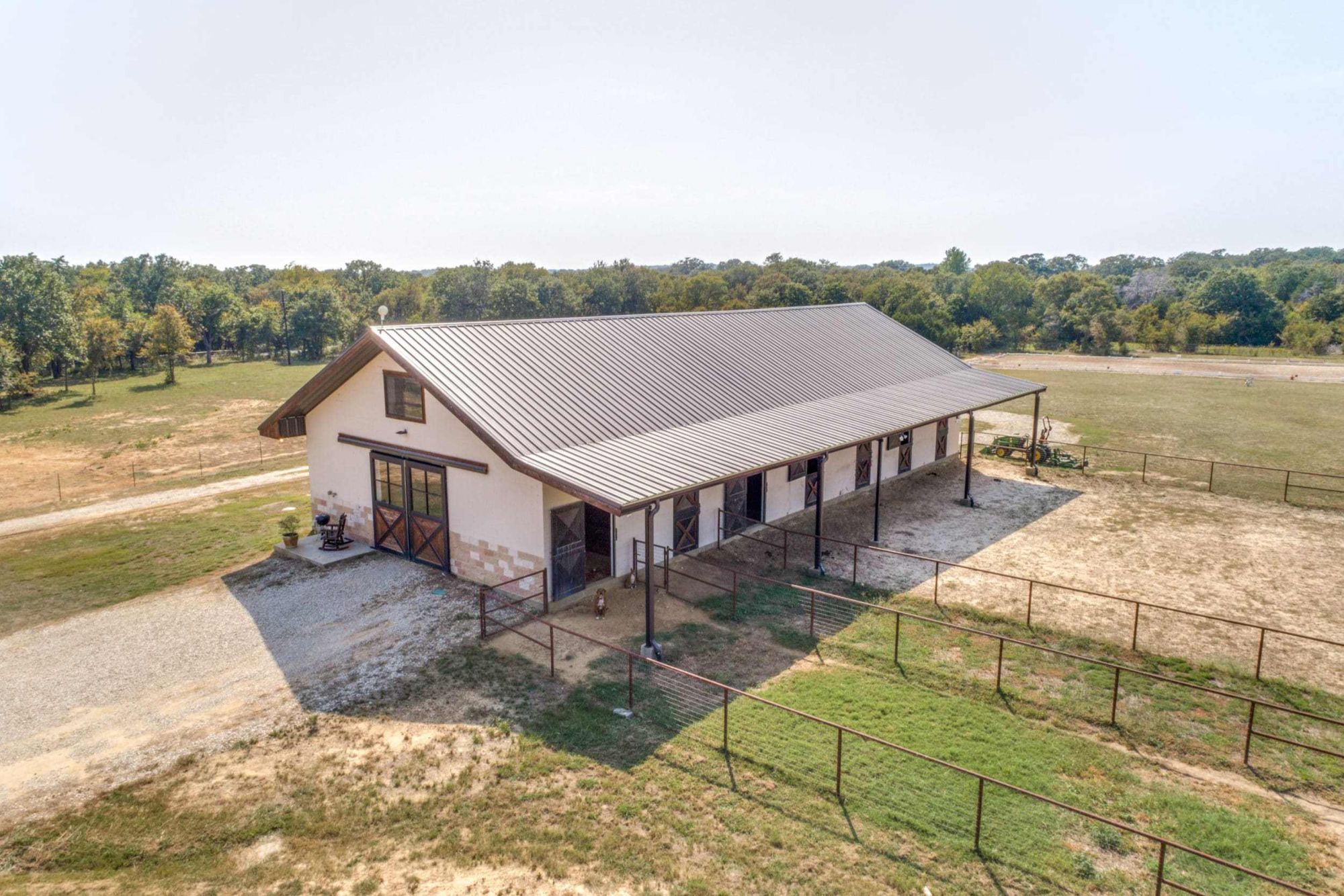
Soil and Site Conditions Matter More Than You Think
Where you're building matters. Soil type affects how land behaves once it's cleared and graded. Clay-heavy soils common in East Texas, Mississippi, and Arkansas expand and contract with moisture, which can create grading challenges and make compaction more critical. Sandy soils drain faster but may require more structural fill under a slab.
If your land has a creek, pond, or seasonal water feature nearby, drainage planning becomes a priority, not an afterthought. A good land clearing contractor will flag these issues during their site visit. If they don't bring it up, ask.
You should also check with your county about any permits required for tree removal or earthwork. Requirements vary by state and county, but it's always worth a quick call before work begins. This is especially relevant in flood-prone areas or near wetlands, where clearing work may be regulated.
The Right Equipment for the Job
One of the questions landowners ask most often is what equipment will be used. It's a fair question, because the right machine depends on your site conditions.
Forestry mulchers work well for clearing brush and smaller trees efficiently. They grind material in place, which means no hauling and faster progress per acre. They're often the best starting point for lightly to moderately wooded properties.
Excavators become necessary when you have large trees, significant root systems, or stumps that need to come fully out of the ground. They're also essential for grading and drainage work. You can't grade a building pad with a mulcher.
Bulldozers excel at pushing material and rough grading large areas. On bigger lots, a dozer is often used after initial clearing to shape the terrain before finish grading.
A well-equipped contractor for barndominium site prep should have access to at least an excavator and a dozer or skid steer with grading capabilities, not just mulching equipment.
How to Prepare for Your Contractor Walkthrough
When you meet a land clearing contractor on site, come ready to walk the full area and answer these questions:
What is the building footprint and driveway path?
Do you want material mulched in place, piled, or hauled off?
Do you have any trees you want preserved?
Is this going on a slab, pier and beam, or something else?
Are there any underground utilities or septic systems to be aware of?
The more specific you are, the more accurate the quote you'll receive. Vague requests lead to wide-range estimates, or change orders later.
What Land Clearing for a Barndominium Costs
Costs vary by region, site conditions, tree density, and scope of work. Rough ranges to plan around:
Light brush clearing: $200–$600 per acre
Moderate clearing (mixed brush and trees): $600–$1,500 per acre
Heavy timber or overgrown land: $1,500–$3,500+ per acre
Building pad grading: $500–$2,000+ depending on size and complexity
These numbers aren't quotes. They're planning ranges. Your actual cost depends on what's on the land, how much needs to come out, and what you're asking the contractor to do with it afterward.
Getting two or three competitive bids from local contractors is always worth the time. Prices can vary significantly even within the same county.
Find a Land Pro for Your Barndominium Project
Land Stream connects landowners with vetted land clearing and grading contractors across Texas, Mississippi, Arkansas, Louisiana, Alabama, North Carolina, Indiana, and Oklahoma. Contractors on the platform specialize in residential site prep, including barndominium pads, driveway clearing, pond excavation, and fencing.
If you're getting ready to break ground on a barndominium build, you can use Land Stream to find a qualified local contractor, get competing quotes, and move forward with confidence.